
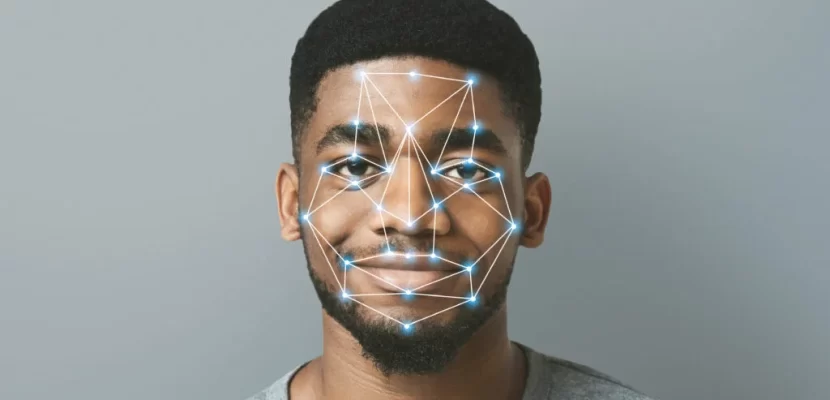
Facial recognition technology has rapidly expanded across law enforcement agencies nationwide, raising significant questions about privacy rights and Fourth Amendment protections. Louisiana police departments increasingly use these systems to identify suspects, verify identities, and investigate crimes—often without clear legal guidelines governing when and how this technology can be deployed. The lack of comprehensive state regulation creates uncertainty about what protections you have against government surveillance.
At the John D. & Eric G. Johnson Law Firm, we stay current on emerging technology issues that affect criminal defense cases. Eric Johnson understands how law enforcement uses facial recognition and other surveillance tools, and he knows how to challenge evidence obtained through improper means. When your freedom depends on contesting how police identified or tracked you, having an attorney who understands both technology and constitutional law becomes essential.
How Louisiana Law Enforcement Uses Facial Recognition
Police departments across Louisiana have adopted facial recognition systems without uniform policies governing their use. These technologies compare images from surveillance cameras, social media, driver’s licenses, and booking photos against databases containing millions of faces. Law enforcement agencies use facial recognition for various purposes, from identifying suspects in active investigations to monitoring crowds at public events.
Officers can submit photos from crime scenes, surveillance footage, or witness cell phones to facial recognition systems that search government databases for potential matches. The technology analyzes facial features and generates a list of possible identities ranked by similarity scores. Police then use these leads to identify suspects, locate witnesses, or develop investigative leads in cases ranging from theft to violent crimes.
Some Louisiana jurisdictions have integrated facial recognition into real-time surveillance systems that continuously scan public spaces. These systems can alert officers when individuals with outstanding warrants or previous arrests appear in monitored areas, creating unprecedented surveillance capabilities that raise serious privacy concerns.
Current Legal Framework Governing Facial Recognition
Louisiana lacks comprehensive state legislation specifically regulating law enforcement use of facial recognition technology. This absence of clear rules leaves police departments free to adopt their own policies, creating inconsistent standards across jurisdictions. Federal constitutional protections provide the primary legal framework limiting how police can use this technology.
The Fourth Amendment protects against unreasonable searches and seizures, potentially restricting certain facial recognition applications. Courts have not definitively resolved whether scanning someone’s face in public constitutes a search requiring probable cause or reasonable suspicion. When police use facial recognition to identify individuals during traffic stops or arrests, officers generally cannot extend stops solely to conduct facial recognition scans without reasonable suspicion. In DWI cases and other traffic enforcement situations, prolonged detention while waiting for facial recognition results may violate your Fourth Amendment rights.
Problems With Facial Recognition Accuracy
Facial recognition technology suffers from significant accuracy problems that can lead to false identifications and wrongful arrests. Understanding these limitations is crucial when police claim this technology identified you as a suspect.
Studies consistently show that facial recognition systems produce higher error rates when analyzing faces of people of color, women, and younger individuals. These accuracy disparities create serious risks of misidentification throughout Louisiana:
- Environmental factors like lighting conditions and camera angles compromise reliability
- Systems generate probabilistic matches rather than definitive identifications
- High-confidence matches can still be wrong
- Police sometimes treat results as conclusive proof rather than investigative leads
- Overreliance on technology contributes to false arrests and wrongful charges
Image quality, database integrity, and algorithm limitations all affect accuracy. Defense attorneys can expose these weaknesses when challenging facial recognition evidence.
When Facial Recognition Evidence Can Be Challenged
Defense attorneys can challenge facial recognition evidence on multiple grounds, depending on how police obtained and used the technology. These challenges protect your constitutional rights while exposing weaknesses in the prosecution’s case.
Constitutional violations occur when police use facial recognition in ways that exceed Fourth Amendment limitations. If officers conducted warrantless searches of databases without proper justification, or if they extended stops to conduct facial recognition scans, your attorney can file motions to suppress the resulting evidence. Courts may exclude identification evidence obtained through unconstitutional means, potentially undermining the prosecution’s entire case.
Reliability challenges focus on the technology’s accuracy limitations and potential for misidentification. Your attorney can present expert testimony about error rates, algorithm biases, and factors compromising the specific identification in your case. Chain of custody issues arise when police cannot document how they obtained photos used for facial recognition searches, or when they cannot verify database integrity.
Protecting Your Rights During Police Encounters
Understanding your rights regarding facial recognition and other surveillance technology helps protect you during interactions with law enforcement. During traffic stops or street encounters, police generally cannot force you to look at cameras for facial recognition purposes without reasonable suspicion or probable cause.
If officers request that you pose for photos or submit to facial scanning, you can decline. However, after lawful arrest, police can photograph you as part of standard booking procedures, and those images may be added to facial recognition databases. Be aware that anything you post publicly on social media can be accessed by police for facial recognition analysis. Photos you share online and images others post tagging you all become potential sources for law enforcement facial recognition searches.
Contact the John D. & Eric G. Johnson Law Firm
Facial recognition technology creates new challenges for criminal defense that require attorneys who understand both emerging technology and constitutional law. Eric Johnson has been admitted to the Louisiana Bar since 1993 and is also admitted to practice in the United States District Court for the Western District of Louisiana and the United States Court of Appeals 5th Circuit. As a member of the National Association of Criminal Defense Lawyers and the Louisiana Association of Criminal Defense Lawyers, he stays current on legal developments affecting how law enforcement uses surveillance technology.
Eric’s trial experience includes challenging identification evidence and filing motions to suppress evidence obtained through improper means. He understands how to expose weaknesses in technology-based prosecutions while protecting clients’ constitutional rights. If you’re facing criminal charges where facial recognition or other surveillance technology played a role in your identification, contact us today to discuss your case and learn how we can challenge the evidence against you.