


A first-time arrest can jeopardize your career, housing options, and financial future—but Louisiana law provides paths to keep your record clean. Under Louisiana’s pretrial diversion programs, qualifying first-time offenders may avoid conviction entirely by completing court-ordered requirements instead of facing traditional prosecution.
At The John D. & Eric G. Johnson Law Firm, our Louisiana criminal defense attorneys help first-time offenders pursue pretrial diversion as an alternative to prosecution. According to the Bureau of Justice Assistance, these programs effectively reduce future criminal activity while saving defendants from the long-term costs associated with a criminal conviction.
What Are Louisiana’s Pretrial Diversion Programs for First-Time Offenders?
To qualify for a pretrial diversion program in Louisiana, you must demonstrate no prior criminal record. If you have previous exposure to the criminal justice system—including certain juvenile offenses—you may be barred from eligibility.
Common first offenses that may qualify for pretrial diversion include:
- Alcohol possession by a minor
- Simple battery or assault
- Drug possession or possession with intent to sell
- Reckless conduct
- Reckless driving or racing
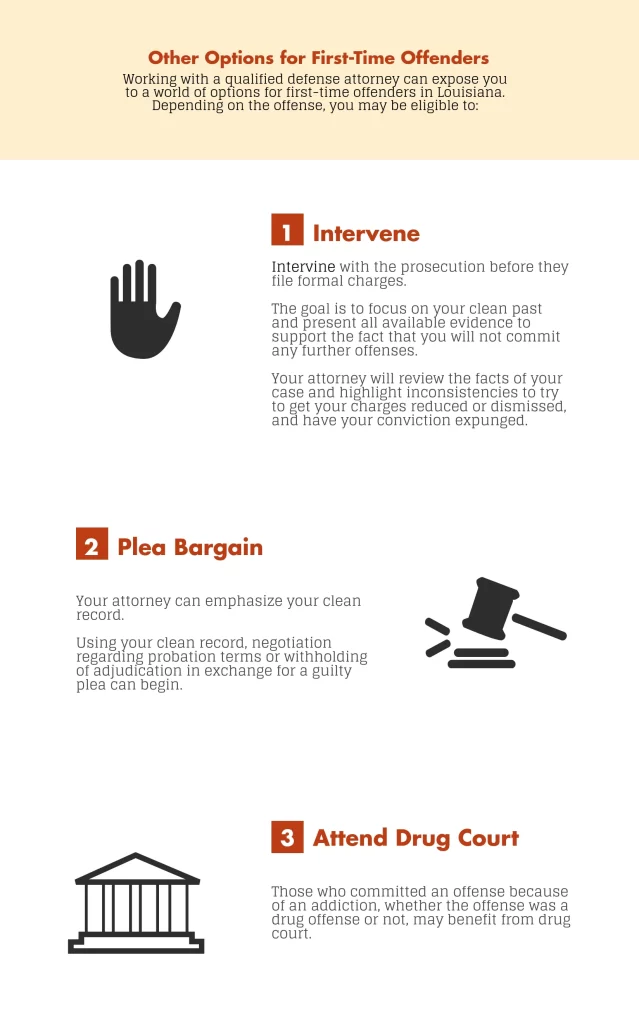
Eligibility is determined by the District Attorney on a case-by-case basis. If the D.A. approves your participation, you must enter a conditional no contest or guilty plea under Article 893 (for felonies) or Article 894 (for misdemeanors). This deferred adjudication means the judge holds your plea in abeyance until you complete all program requirements. While some first-time offenders receive automatic diversion offers, many require an attorney to negotiate on their behalf.
Requirements of a Louisiana Pretrial Diversion Program
Pretrial diversion functions as a form of supervised probation designed to rehabilitate first-time offenders while keeping them out of overcrowded Louisiana jails and prisons. Requirements are determined individually based on your specific charges. Common obligations include:
- Random drug and alcohol testing
- Substance abuse treatment or counseling
- Community service hours
Program costs can range from several hundred to several thousand dollars, depending on your charges. DWI-related offenses typically carry higher fees than other drug charges, while non-drug offenses may have lower enrollment costs. These financial obligations include court fees, treatment costs, and any restitution owed to victims. Speak with a Louisiana criminal defense lawyer to understand the potential costs before deciding whether diversion suits your situation.
How Long Does Completing a Pretrial Diversion Program Take?
Louisiana pretrial diversion programs typically require 6 to 12 months to complete, depending on the severity of your charges. During this period, you must attend all required meetings, complete treatment programs, and fulfill community service obligations. Successfully completing the program means you avoid conviction for the charged offense.
However, your arrest record remains visible until you pursue expungement in Louisiana. Under Article 894, you may file for expungement immediately after completing a misdemeanor diversion program. For felony diversion under Article 893, waiting periods may apply. Until expungement is granted, your arrest will appear on background checks, which can affect employment opportunities, professional licensing, and housing applications.
Contact The John D. & Eric G. Johnson Law Firm for Help
Whether you have just been arrested or charges have already been filed, securing legal representation early improves your chances of qualifying for pretrial diversion. Attorney Eric G. Johnson has represented clients throughout north Louisiana in criminal matters ranging from misdemeanor charges to serious felony cases. He thoroughly evaluates each case and gathers all available evidence to present your situation in the most favorable light.
From pursuing diversion programs to seeking expungement after completion, our firm provides dedicated attention to every client’s criminal defense needs. To discuss your eligibility for Louisiana’s first-time offender programs, contact us today to schedule a consultation.