
Call For A Consultation 318-377-1555
Call For A Consultation 318-377-1555
State Rep. Michael Melerine Cleared With No Charges After July Roadside Medical Emergency
Attorney Eric Johnson says dehydration and low blood sugar, not alcohol, explain what deputies saw. Caddo Parish closed the case with no arrest and no charges.
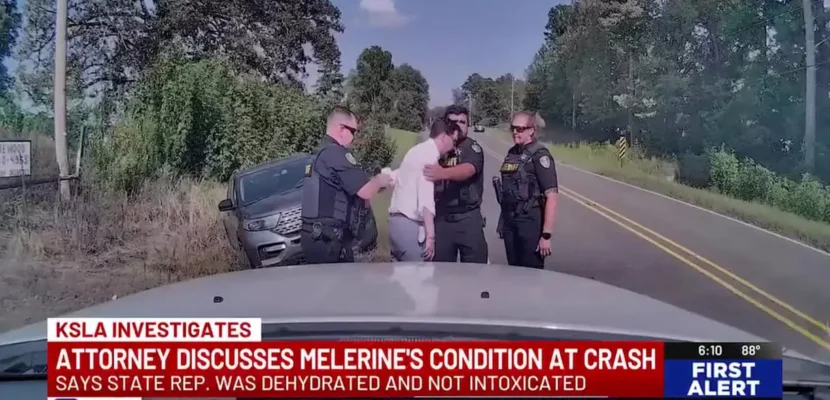
Louisiana State Representative Michael Melerine faced no arrest and no charges after Caddo Parish deputies found his SUV in a ditch in July. His attorney, Eric Johnson, says the incident came from a medical emergency, not intoxication.
It happened July 22 on Overton Brooks Road at Wallace Lake Road in Caddo Parish. Deputies located Melerine’s SUV in a ditch just before 5 p.m. According to Caddo Parish Sheriff’s Office reports, deputies initially suspected he was under the influence. One deputy wrote that Melerine seemed intoxicated, stumbled as he got out of the vehicle, and appeared disoriented and possibly hallucinating.
Johnson says the disorientation was medical. He points to low blood sugar and dehydration. Melerine had gone an extended period without adequate food and water, and he had recently started a GLP-1 injection he was not used to taking. According to the deputy’s report, Caddo Fire District 6 paramedics who treated him at the scene determined his condition was caused by dehydration. At the hospital, staff gave him IV fluids to rehydrate.
The day’s timeline fits that account. Melerine had driven to the Shreveport area from Baton Rouge, a trip of about four hours. Johnson says his client was returning from a joint legislative committee meeting on technology and cybersecurity that began at 10:30 that morning. KSLA Investigates reviewed on-demand video from the Louisiana House and confirmed Melerine was present at the meeting.
No chemical test was taken. Sheriff’s office records show Melerine declined a field sobriety test and declined a blood alcohol test, so there is no toxicology result to confirm or rule out impairment. The two deputies also differ on one detail. One reported a faint odor of alcohol. The other reported no odor of alcohol at all.
Johnson has been plain about what the record shows. Without a chemical test, no one can state a blood alcohol level either way. He adds that he spoke with Melerine at close range in the hospital room and noticed no odor of alcohol.
Deputies filed no charges. Melerine was treated and released from the hospital.
After body camera footage from the incident was released, Melerine issued a statement:
“Recently, body camera footage was released showing a medical emergency I experienced in July while driving, causing me to run off the road. Deputies with the Caddo Parish Sheriff’s Office responded, recognized that I needed help, and made sure paramedics got to me. EMS took me to the hospital, where I was treated and released. I was not arrested, and no charges were filed. I’m grateful to the deputies, firefighters, and medical professionals who identified the medical emergency and ensured I received proper medical care. I am also grateful to the medical professionals at the hospital that examined and treated me. My family appreciates all those who have reached out and requests privacy at this time.”
The John D. and Eric G. Johnson Law Firm, LLC represented Representative Melerine in the matter. The firm handles criminal defense in Shreveport, Minden, and across northwest Louisiana.
Your rights during a traffic stop in Louisiana
This case is a reminder that how a roadside situation looks is not the same as what the evidence proves. A medical event can mirror the signs officers associate with impairment. Knowing your rights before that happens matters.
Field sobriety tests are voluntary. The walk-and-turn, the one-leg stand, and the eye-tracking test are not required, and declining them is not a crime on its own. These roadside exercises are separate from chemical testing, and the choice around refusing a breath or blood test carries its own rules.
Chemical tests work differently. Under Louisiana’s implied consent law, La. R.S. 32:661, driving on state roads means you have agreed to a breath, blood, or urine test if you are lawfully arrested for DWI. Refusing after a lawful arrest can lead to a driver’s license suspension, and a refusal after two prior separate refusals can be charged as a crime. Because Melerine was not arrested, those refusal penalties were not in play here.
You have the right to stay quiet beyond handing over your license, registration, and proof of insurance. You do not have to answer where you have been or whether you have had anything to drink. You also have the right to ask for a lawyer, and asking for one is not an admission of anything.
If you are having a medical problem, say so and ask for medical help. Low blood sugar, dehydration, a reaction to medication, a stroke, or a seizure can all look like impairment to someone standing at your window. Getting evaluated protects your health and creates a record of what actually happened.
None of this is legal advice, and every stop is different. If you or a family member is facing questions after a traffic stop or a DWI arrest in northwest Louisiana, talk with a criminal defense attorney before making decisions about your case.
Sources and coverage
Local coverage of this matter includes reporting from KSLA News 12: deputies explain why no arrest was made, records on the refused sobriety test, and the dehydration account at the scene. Primary references include Representative Melerine’s official Louisiana House of Representatives page and the text of Louisiana Revised Statute 32:661 on implied consent.
Fields Marked With An ”*” Are Required
"*" indicates required fields
© 2026 John D. & Eric G. Johnson Law Firm, LLC• All Rights Reserved. Disclaimer | Site Map | Privacy Policy.
*Images are obtained under license from Canva and other third-party stock image providers, with attribution included where required.
Digital Marketing By: